Local rules
What Oshawa's property standards require of windows, glass and screens
Under Oshawa's Property Standards By-law, windows, doors, storms and screens have to keep the weather out, stay in good repair and do their job. Cracked glass gets reglazed. Windows that open in a home get screens. Upper apartment windows get a safety device. Each bedroom floor needs a window someone can climb out of. This is a plain-language summary, not legal advice. The official by-law is the rule.
The by-law in one paragraph
Oshawa's Property Standards By-law (By-law 1-2002, amended many times since) sets the minimum condition for buildings. It applies to all property in the city: owned or rented, a house in the older core or a new build in the north end, a converted duplex or an apartment tower. Windows come up in Section 5.5 (doors, windows and skylights) and Section 6.10 (egress windows). Read the consolidated by-law for the exact wording, and check for amendments after September 2026.
We're a referral service, not a law office or the City. We put owners, landlords and property managers in touch with independent local glass pros who do the repairs. This is our plain reading of the window clauses.
"Good repair" and "weather tight": glass, hardware, weatherstripping, caulking
Sections 5.5.1 to 5.5.3 are the core. Windows, doors and skylights, including storm and screen doors and windows, must be kept in good repair and able to do their job, and exterior ones weather-tight. Good repair includes reglazing cracked, broken or missing glass, fixing defective hardware, and weatherstripping and caulking where they've failed.
| What the by-law says | What it looks like in practice | Usual fix |
|---|---|---|
| Weather tight | No draft or water around the sash or the frame | New weatherstripping, recaulking, adjusting the sash |
| Reglazing cracked, broken or missing glass | Any crack counts, not just a hole | A new pane or a new sealed unit |
| Hardware | Locks, latches, cranks and balances that work | Replace the worn part |
| Weatherstripping and caulking | Nothing torn, missing or dried out | Renew it |
| Storms and screens | Storm windows, storm doors and screen doors kept up too | Rescreen, reglaze or refit |
What about a foggy window? The by-law doesn't mention fog between the panes. That's a failed seal, not a crack, and whether an officer writes it up is the City's call. Either way the usual fix is replacing the sealed unit rather than the window. See foggy windows. Cracked panes: broken window glass. Cranks and locks: window repair.
Insect screens on every openable window
Section 5.5.7 is short. Every window in a dwelling unit that can open, or that the standards require to open, needs screening that keeps insects out. That includes the basement window nobody uses. A fixed picture window doesn't need one. Screens also fall under good repair, so a torn screen or a bent frame counts, and so do screen doors and storm doors.
Small jobs are welcome here. One screen is quick work; a whole unit at turnover is easier to book. Window screen repair covers rescreening. Windows that came without screens, or odd older sizes, get custom window screens. Screen doors have their own page.
Apartment windows above ground level: safety devices
Section 5.5.8 was amended in 2025. In every apartment building, a window that opens, sits above the height from the ground set out in the by-law, and doesn't lead to a balcony must have a safety device, maintained and in good repair.
The by-law doesn't name a product; it's often a stop that keeps the sash from opening wide. Not sure a device qualifies, or whether your building counts as an apartment building? Ask the City before buying a batch. For property managers it's a walk-through item: each device present, fixed firmly, still stopping the sash. A broken stop is a part-level repair. Property managers explains how one request can cover a building.
Egress windows on every floor with a bedroom
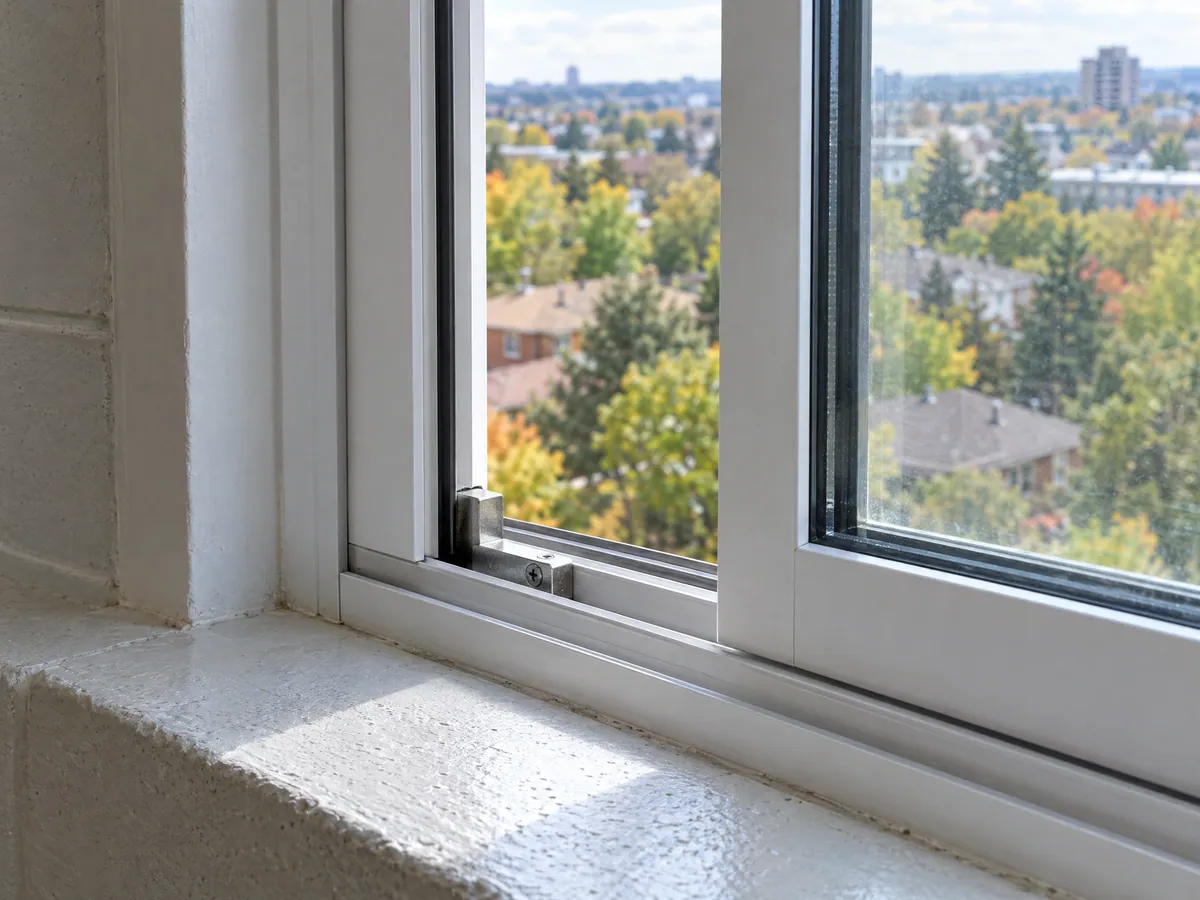
Section 6.10.1 is the one renovators trip over. Unless a door on the same floor leads directly outside, every floor with a bedroom needs at least one outside window that:
- opens from the inside without tools;
- has an unobstructed opening at least as large as the by-law sets, with a minimum for its narrowest side;
- outside the basement, has a sill no higher than the by-law allows.
An egress window that opens into a window well also needs clear space in front of it.
It comes up most with basement bedrooms in rentals and converted houses. Bars or locks that need a key or tool to release don't fit the "without tools" wording. A too-small window means enlarging the opening, which needs a building permit, so check with the City first. Basement and egress windows covers the job.
The Ontario Building Code has a similar bedroom-window rule for work done under a building permit.
Rental licensing areas and what changes there
The property standards apply everywhere in Oshawa. Rental licensing doesn't. Under Licensing By-law 122-2024, the City licenses rental housing only around Durham College and Ontario Tech University and along the Simcoe Street corridor. The rental housing page explains the program and links the licensing area maps.
Inside those areas a rental needs a City licence, and licensing brings inspections, so walk through windows, screens and egress before the date. The same page notes carbon monoxide alarms are required on all storeys from 1 January 2026. Outside the mapped areas there's no licence, but the window clauses still apply. The program has been debated at Council, so check the page for current boundaries.
Heritage-designated homes: repairs versus alterations
On a property designated under the Ontario Heritage Act, the repair duties still apply; what changes is how you meet them. Minor alterations and regular maintenance need no Council approval. Alterations that affect heritage attributes do, and heritage permits carry no fee. Reglazing a pane sits on the maintenance side; replacing original sash with a different design can touch heritage attributes, so ask the City's heritage staff first. The repair-or-replace guide covers restoring older wood windows.
Who to call about a property-standards concern
The City's property maintenance and standards page explains how to raise a concern through Service Oshawa. Tenants in apartment buildings can also ask for a unit inspection there.
Who arranges and pays for a repair in a tenancy is set by the lease and by Ontario's Residential Tenancies Act, not by this guide. Whichever side you're on, keep requests and replies in writing, with photos, so everyone works from the same list. Other local rules, from permits to rebates, are summarised on the guides page.
A room-by-room checklist
Walk the unit, tick what's fine, photograph what isn't.
| Room | What to check |
|---|---|
| Every room | Each sash opens, closes and latches. No cracked or missing glass. No draft or water around the frame. |
| Bedrooms | On each floor with a bedroom, one window opens from inside with no tools and is large enough to climb out of, with nothing in the way. |
| Basement | Egress for any basement bedroom, a clear window well, screens on every window that opens. |
| Kitchen and bath | Screens on openable windows. Sills and sash corners firm, not soft from condensation. |
| Apartment units | A working safety device on each upper window that opens and doesn't lead to a balcony. |
| Doors | Storm and screen doors close and latch. Door glass intact. |
| Outside | Caulking sound around each frame. Storm windows intact. Paint holding on wood sills. |
Fixing items from an inspection or a tenant's request? Send the whole list in one quote request. We pass it to a local glass professional who can price it as one job, and follow up so it doesn't stall.
Frequently asked questions
Does Oshawa require a screen on every window?
On every window in a home that can open, or that the standards require to open; fixed windows don't need one. Screens must also be in good repair, so a torn or ill-fitting screen counts, and storm and screen doors fall under the same clause. Window screen repair covers rescreening and new frames.
Does the by-law make me replace old windows?
No. It asks that windows keep the weather out, stay in good repair and work, with cracked glass reglazed and hardware, weatherstripping and caulking sound. It's about condition, not age. Replacement comes in when a window can't be put right, which the repair-or-replace guide helps you judge.
A window in my Oshawa rental is broken. Who deals with it?
The by-law says cracked or broken glass has to be reglazed. It doesn't settle who arranges or pays in your tenancy; the lease and Ontario's Residential Tenancies Act do. Put the request in writing with a photo. If a property-standards concern isn't dealt with, the City's property maintenance page explains how to raise it with Service Oshawa.
Which apartment windows need a safety device?
In apartment buildings: windows that open, sit above the height set in the by-law, and don't lead to a balcony. The device must be maintained and in good repair; it's often a stop that limits the opening. Ask the City if unsure what qualifies. Property managers explains how one request can cover a building.
Does my basement bedroom need an egress window?
The basement needs at least one, unless a door on that floor leads directly outside. The rule is one per floor with a bedroom, not one per bedroom. The window has to open from inside without tools and meet the minimum opening size in the by-law, and a window well needs clear space in front of it. Enlarging an opening needs a building permit. Basement and egress windows covers the work.
Where is Oshawa's rental licensing area?
Around Durham College and Ontario Tech University, and along the Simcoe Street corridor, under Licensing By-law 122-2024. The City's licensing area maps show the exact boundaries. Check the rental housing page for current status. Outside those areas there's no rental licence, but the property standards for windows and screens still apply.